Garage Floor Coating in Cupertino, CA
Garage floor coating information for Cupertino homeowners. Learn about epoxy, polyaspartic, decorative flake finishes, and concrete preparation.
Floor Coating Services in Cupertino, CA
Cupertino's garage floors belong to a city shaped by former orchard landscapes, established suburban neighborhoods and later technology-era development. The city's General Plan addresses growth through 2040, while its 2023–2031 Housing Element was certified in September 2024. Historic resources such as the Picchetti Winery landscape contrast with more recent housing and commercial corridors. That contrast makes house age a poor proxy for garage slab age: a floor may have been replaced after a remodel, while newer concrete may still carry curing agents or previous sealers.
Local geography adds a second genuinely different theme. Stevens Creek and the eastern foothill-to-valley transition shape public planning and stormwater systems, but creek proximity does not establish whether water enters a garage. Sloped residential approaches, downspout placement and signs of moisture on the individual slab need observation. A homeowner should distinguish exterior runoff from moisture vapor and from ordinary wet-vehicle residue before buying a coating.
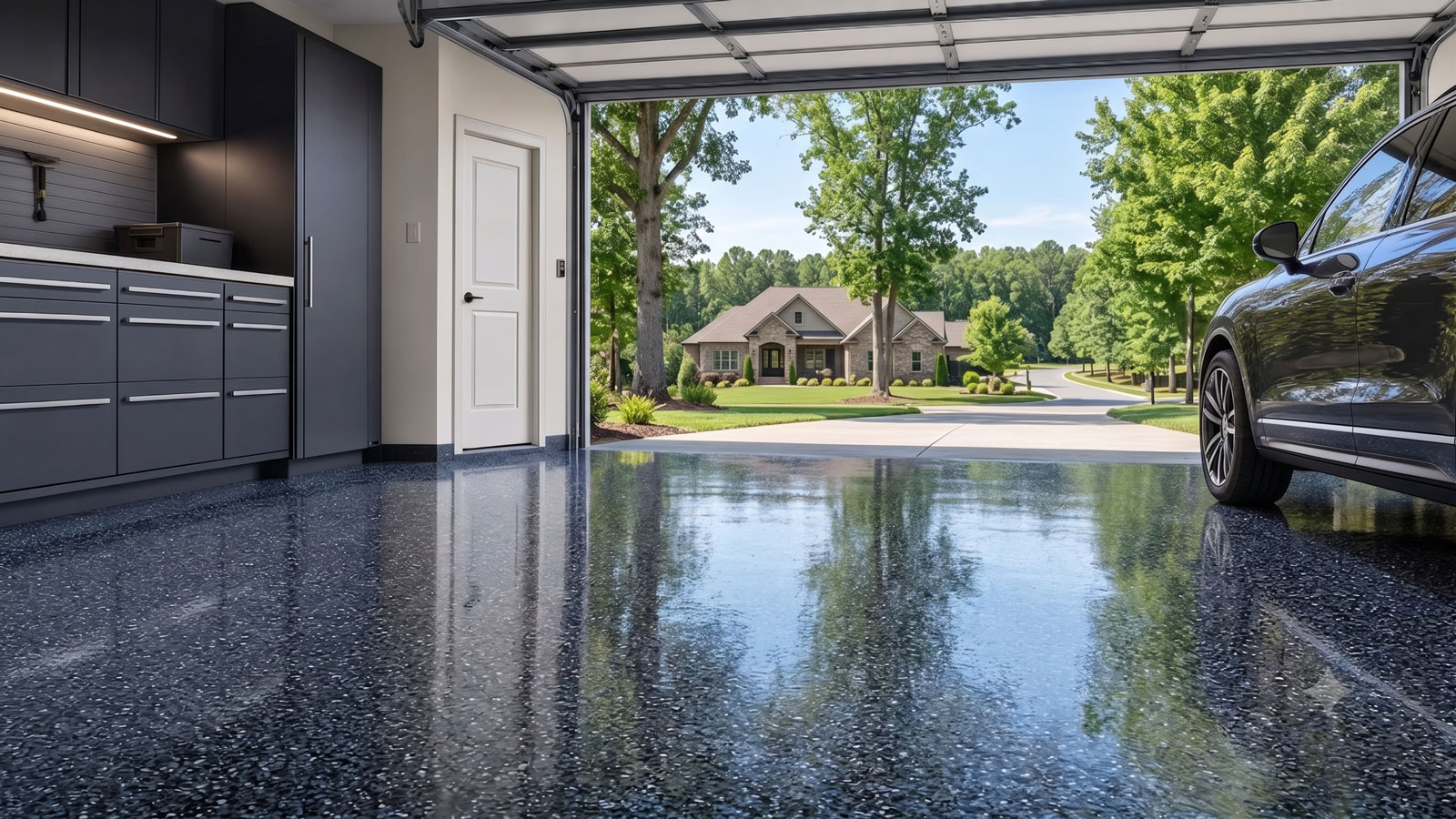
A properly prepared epoxy, polyaspartic or decorative-flake system can simplify cleanup on sound concrete. The estimate should first identify old paint, patches, oil, cracks, joints, access conditions and actual moisture concerns. An attractive finish is not a remedy for drainage defects or unstable slab movement.
Local Market Insight
Cupertino's planning horizon reaches 2040 and its 2023–2031 housing element received certification in September 2024. Orchard-era historic sites, later residential development and Stevens Creek terrain create different garage and drainage contexts without proving private concrete defects.
What Affects the Cost of Garage Floor Coating in Cupertino?
Cupertino floors can differ considerably between an altered established-house garage and a later attached parking bay. Old epoxy, curing sealer, cracks or workshop oil change preparation requirements. Long or sloping driveways and built-in storage can change access and edge work.
Stevens Creek and foothill runoff are useful planning context but cannot substitute for checking the actual garage threshold. Separate drainage corrections, if necessary, from coating removal, grinding, repairs and decorative system layers.
- Housing and slab chronology: Cupertino's orchard-era neighborhoods and later developments may include garages constructed or repoured at different times. Verify slab sections, previous repairs and finish history on site.
- Existing paint and sealers: Older workshop floors can have paint, oil or patch materials; newer concrete may have curing compounds. Identify what needs removal and the profile required before bonding.
- Stevens Creek and grade: The creek and foothill geography describe public drainage context, not an individual moisture condition. Inspect driveway pitch, downspouts and actual water marks near the doorway.
- Cracks and edges: Prior repairs, joints and spalled entrance edges require different treatments. The bid should distinguish stable cracks from moving concrete needing further assessment.
- Staging and layout: An attached garage full of household storage or a driveway with limited equipment room can add labor. Price masking, edges and temporary parking arrangements explicitly.
- Finish and curing: Sunlight near the open door, rain-season traction and return-to-parking needs affect the finish choice. Confirm full product layers and manufacturer temperature and cure guidance.
Call for a clear, project-specific estimate — or request one online.
Cupertino's Orchard History, New Housing Plans and Actual Slab Age
Cupertino's current General Plan looks toward 2040, and its 2023–2031 Housing Element received state certification in September 2024. Historic resources from the orchard and winery period coexist with decades of suburban development and proposals for additional housing. Public planning can describe which parts of a city are changing, but it does not reveal when a residential garage floor was poured or whether an old surface treatment remains.
An older home may have a garage slab that was replaced during a remodel. Another household may have a relatively recent attached bay with a smooth but sealed floor. Look closely for paint peeling under tires, previous crack fillers, dark oil spots, surface hardeners, patched areas and joints. Even new-looking concrete may require mechanical preparation under the proposed coating system.
Access and use affect cost as well. Some garages contain cabinetry, appliances, bicycles and stored equipment that must be moved before grinding; others have awkward thresholds or finished transitions. A written scope should identify how those items will be handled and what repairs are included. Decorative flake or a rapid-cure topcoat is only one part of the installation.
Homeowners comparing bids should first check that contractors assessed the same concrete conditions and specified equivalent preparation and layers. Cupertino's distinctive development history matters because a single neighborhood or house-age description is not enough to choose materials or establish a labor price.
Stevens Creek, Foothill Drainage and Garage Water Questions
Cupertino's planning landscape includes Stevens Creek, established residential neighborhoods and foothill terrain. Public natural-resource and stormwater policy concerns water movement across this broader setting, but a creek corridor does not imply that a particular garage suffers flooding or vapor pressure. Differences in lot slope and roof drainage are more immediate questions for the homeowner.
Look at the last section of the driveway before the garage door. Does rain move toward the threshold or away from it? Where do downspouts empty, and is any drain blocked by leaves? Inside, look for water lines, old coating bubbles and dark spots that persist even after dry weather. Water moving across the door opening requires a different solution from moisture originating within the concrete, and both differ from water brought by tires.
Seasonal rain, dust and automotive grime affect garages throughout Cupertino. A continuous, well-bonded finish can make ordinary cleaning easier, but grit and pooled liquids still need removal. Discuss traction for wet shoes and the way sunlight reaches a finish at the doorway, particularly if the garage doubles as a workspace.
If outside runoff is entering, address that before applying decorative layers. If moisture is suspected in the slab, use the evaluation recommended for the intended coating system. Then specify cleaning, surface profiling, stable crack repairs, primer, base coats, flake or texture and topcoat. A useful quote turns regional creek and foothill facts into specific inspection questions instead of claiming every Cupertino floor has the same problem.
Frequently Asked Questions
Does a Cupertino house from the orchard-era neighborhoods have an old garage slab?
Not necessarily. Garages are frequently altered or repoured after a house's original construction. Inspect actual coatings, concrete soundness, cracks and patches before assigning preparation costs.
Is Stevens Creek proximity proof of excess moisture in my garage?
No. Regional creek and watershed information cannot measure private concrete. Examine the property's grade, threshold, gutters, water history and slab condition before choosing a coating.
Can a decorative flake system fix a downhill driveway's runoff?
No. Stormwater entering through the garage door requires exterior drainage, grading or threshold correction. Coating follows resolution of active water entry and an assessment of the slab.
What belongs in a Cupertino garage-floor quote?
Ask for stripping of paint and sealer, grinding and preparation, repairs, moisture evaluation where warranted, complete system layers, texture, handling of stored items and vehicle-return timing.
Can a newly poured Cupertino floor skip grinding?
Not automatically. Curing products and dense finishes can interfere with adhesion. The contractor should prepare the substrate to the specifications of the proposed system rather than relying on how new it looks.
Cupertino Neighborhoods & Local Context
Phone Quote Line
Talk through your floor, coating options, and the factors that affect a project-specific quote.
(669) 332-3999Public Planning Range
$3,200–$5,500
Typical two-car garage planning range. $7–$12 per sq. ft. Final pricing depends on floor size, concrete condition, prep work, coating type, and finish options.
Helpful Guides
Other Service Areas