Garage Floor Coating in Santa Clara, CA
Garage floor coating information for Santa Clara homes and workspaces. Learn about epoxy, polyaspartic, decorative flake, and concrete preparation.
Floor Coating Services in Santa Clara, CA
Santa Clara's garage floors reflect an established city with older residential districts, later subdivisions and major employment and redevelopment areas. Its General Plan for 2010–2035 was adopted November 16, 2010, with phases intended to accommodate changing land use through 2035. A house near the historic city center can have a later garage addition or replacement slab, while a relatively recent attached garage may still contain builder treatments. Construction era is useful background, but the actual concrete needs inspection.
Water and land-use conditions also differ across Santa Clara. San Tomas Aquino Creek and the city's stormwater system are meaningful local infrastructure, and redevelopment under the plan must address drainage and environmental requirements. That does not show whether water reaches a private garage door. Driveway slope, downspouts, prior water marks and persistent floor dampness are the evidence that matters when evaluating whether the substrate can receive a coating.
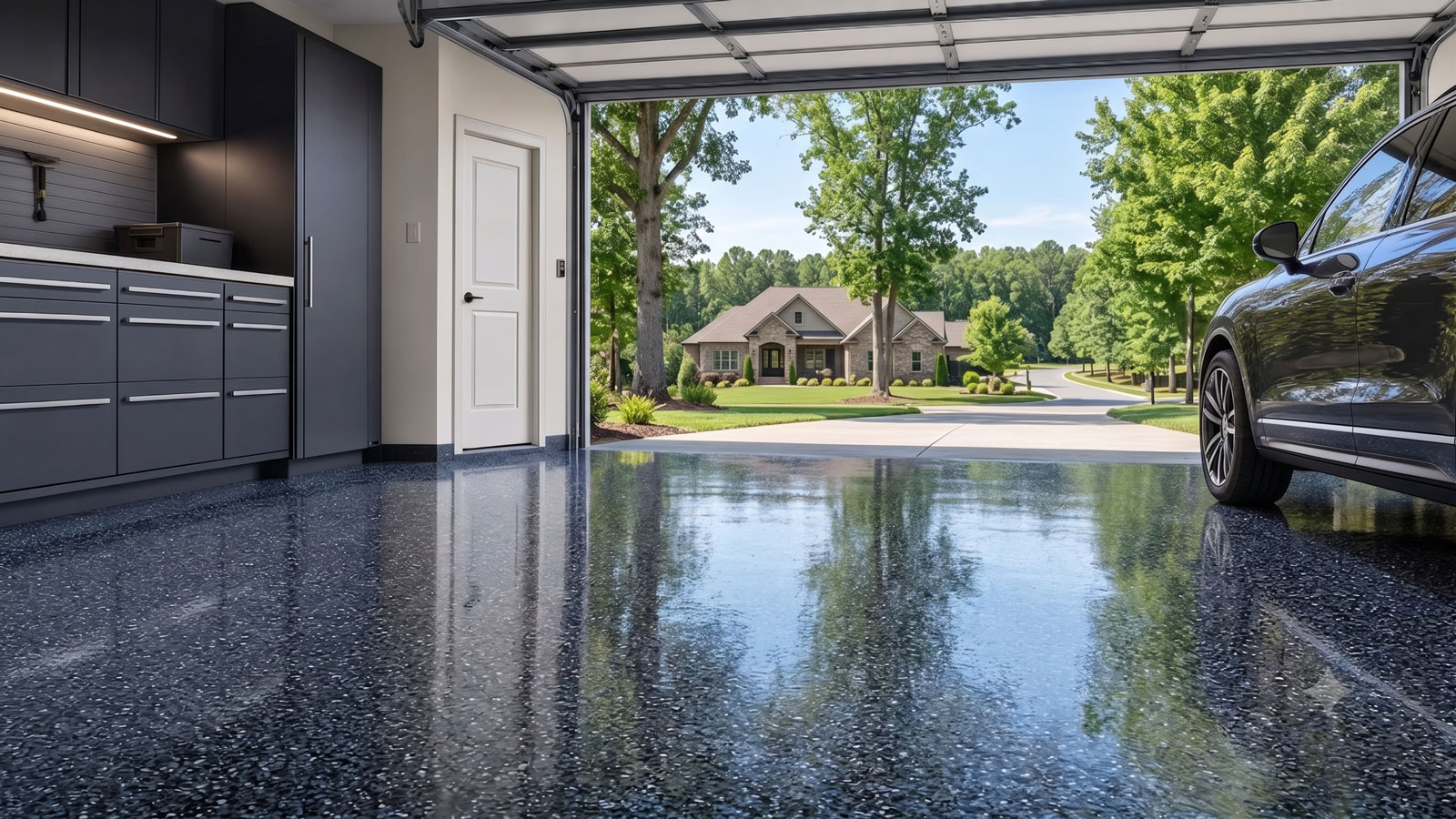
A properly installed epoxy, polyaspartic or decorative-flake system can help make sound concrete easier to maintain. Before choosing appearance or cure speed, determine whether old paint, sealer, cracks, joints or oil need removal and repair. The quote should also explain how the garage will be staged and when the homeowner can safely return vehicles.
Local Market Insight
Santa Clara adopted its 2010–2035 General Plan in November 2010 and continues to implement its phased housing and land-use framework. Historic-center properties, later residential districts and San Tomas Aquino Creek drainage context make slab history and water entry genuinely property-specific.
What Affects the Cost of Garage Floor Coating in Santa Clara?
A Santa Clara floor project may involve a painted garage near an established neighborhood, an attached space with builder sealer or concrete repaired after a remodel. Those differences change the quantity of stripping, grinding and edge work even when the floor area is identical.
Regional creek and stormwater planning should prompt practical questions about runoff but not unsupported claims about private moisture. Separate outside drainage fixes from concrete evaluation, surface repairs, coating layers and finish choices.
- Garage construction history: Santa Clara's historic core, postwar neighborhoods and later development can contain different garage generations. Identify added slabs, repairs and past coatings by observation rather than house age.
- Paint, sealers and tire residue: Prior floor paint, oil and curing sealers may prevent proper bonding. The estimate should identify film removal and the mechanical concrete profile required for the chosen system.
- Creek and stormwater context: San Tomas Aquino Creek and city drainage plans concern public infrastructure, not private slab testing. Evaluate driveway grade, water marks, downspouts and any persistent dampness at the garage.
- Cracks and joint treatment: Stable cracks, construction joints and deteriorated door edges call for different treatments. Ask what is repaired, what remains a functioning joint and when further assessment is required.
- Access and storage constraints: A compact city lot or heavily used garage may require extra staging, cabinet clearance and perimeter work. Confirm access for grinding equipment and temporary parking arrangements.
- Texture and curing: Rainy-season use, sunlight near the opening and everyday vehicle storage can influence texture and topcoat. Verify installation conditions and return-to-service guidance from the actual system manufacturer.
Call for a clear, project-specific estimate — or request one online.
Santa Clara's 2010–2035 Plan and the History Beneath a Garage
Santa Clara adopted its comprehensive 2010–2035 General Plan in November 2010 and arranged growth in implementation phases, including later changes tied to housing policy. The city's land-use plan recognizes established residential neighborhoods and areas intended for substantial employment and redevelopment. These are different development contexts within the same municipal boundary, and they do not imply identical garage construction or prior surface treatment.
On a property near the older city center, the garage may have been added decades after the home or repoured as part of renovation. In later residential areas, a slab may look smooth and sound while retaining a clear curing material, oil or a previous sealer. Mechanical preparation depends on identifying those layers and examining actual cracks, patches and joints. House age alone does not answer any of those questions.
Practical logistics also vary. A narrow garage entrance with cabinets, steps or finished transitions may need more edge grinding and masking than an open floor. The estimate should identify coating removal, surface profiling, concrete repairs and the number of base and top layers. Ask how the contractor will test or evaluate doubtful areas before making a confident recommendation.
Epoxy versus polyaspartic should be considered only after the substrate is understood. A premium flake blend cannot remedy weak concrete or an unresolved moisture issue. For Santa Clara homeowners, the strongest local relevance comes from recognizing that long-established and redeveloping neighborhoods yield different kinds of project work.
San Tomas Aquino Creek and What Water Means at a Santa Clara Garage
Santa Clara's drainage infrastructure includes San Tomas Aquino Creek and networks of streets and stormwater conveyance designed to manage seasonal rainfall. Planning requirements for redevelopment address water and runoff because they affect community infrastructure. These facts do not demonstrate that any particular house sits in a flood path or that moisture is rising through its garage concrete.
To assess the actual floor, trace where water moves during rainfall. Check whether the driveway falls toward the overhead door, whether a nearby downspout empties onto paving and whether paint has blistered or concrete remains dark after dry weather. Water under a door calls for exterior drainage correction; a persistent slab-moisture condition calls for a different evaluation under the coating system's limits. A puddle from wet tires is different again.
Even garages without stormwater issues receive tracked dirt, rainwater and tire residue. A continuous, well-bonded coating generally makes surface cleaning easier, but a slippery finish can be inconvenient when wet. Ask about traction and whether the system handles incidental sunlight at the door. Routine sweeping and removal of standing liquid remain part of ownership.
A useful bid separates any driveway drainage work from the coating installation. After confirming the slab is sound, it should specify cleaning and stripping, grinding, crack handling, primer or base layers, flake or other texture and topcoat. Include actual weather conditions and time before driving onto the floor. Municipal creek geography is a reason to ask the right questions, not a substitute for a property inspection.
Frequently Asked Questions
Does living near San Tomas Aquino Creek mean my garage needs waterproofing?
No. Creek and municipal drainage plans provide neighborhood context, not a moisture diagnosis for a private slab. Check the actual lot's grade, drainage history and concrete before making coating decisions.
Are garages in older Santa Clara neighborhoods always harder to coat?
Not necessarily. Older houses can have recent garage slabs, while newer concrete may carry curing compounds or sealer. Preparation should be based on observed concrete soundness, old finishes and repairs.
Can a floor coating stop rain coming beneath the garage door?
No. A threshold or driveway runoff problem requires exterior correction. A decorative coating can only be considered after the water-entry route and concrete suitability have been addressed.
What should a Santa Clara quote itemize?
Look for old coating removal, mechanical profiling, cracks and joints, edge details, any justified moisture evaluation, full coating layers, finish texture and manufacturer-based return-to-parking instructions.
Is a faster-curing coating automatically better?
No. Cure timing must be balanced against slab conditions, preparation, installation temperature and the complete product system. Ask what the installer recommends for this specific garage rather than relying on one material label.
Santa Clara Neighborhoods & Local Context
Phone Quote Line
Talk through your floor, coating options, and the factors that affect a project-specific quote.
(669) 332-3999Public Planning Range
$3,200–$5,500
Typical two-car garage planning range. $7–$12 per sq. ft. Final pricing depends on floor size, concrete condition, prep work, coating type, and finish options.
Helpful Guides
Other Service Areas