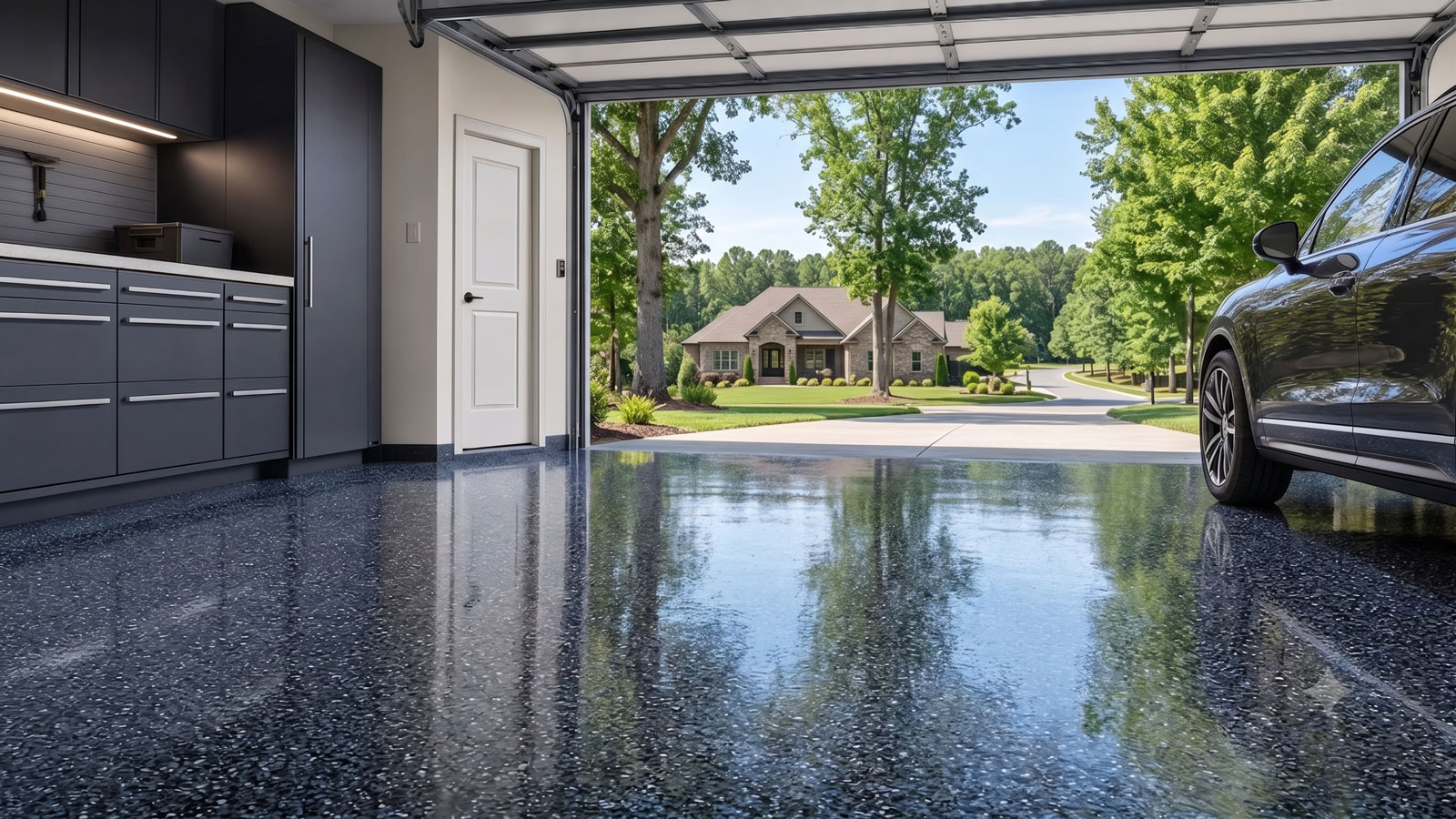
Garage Floor Coating in Mountain View, CA
Garage floor coating information for Mountain View homeowners. Compare epoxy, polyaspartic, flake finishes, and concrete-preparation options.
Floor Coating Services in Mountain View, CA
Mountain View's garage floors belong to a city with established residential districts and major ongoing change around its northern employment area. The city adopted its 2030 General Plan on July 10, 2012, replacing a plan dating to 1992. The North Bayshore Precise Plan addresses land use near the Bay and Stevens Creek while balancing habitat and redevelopment. A floor in an older residential garage can therefore have a different history from a later attached bay: paint, past repairs and builder sealers must be identified on site.
Mountain View's North Bayshore setting is close to sensitive wetlands and public drainage systems. Planning has contemplated substantial new housing there, but proposed capacity is not completed construction and cannot tell whether a particular garage has a moisture problem. The same caution applies inland: driveway grade, downspouts, marks at the door and actual slab dampness are more informative than a neighborhood's proximity to the Bay.
A sound epoxy, polyaspartic or decorative-flake floor can be easier to clean once properly prepared. The installation plan should begin with coating removal, grinding, crack and joint assessment, water-entry investigation where needed, equipment staging and a realistic parking-return schedule. A finish cannot solve exterior drainage or movement in deteriorated concrete.
Local Market Insight
Mountain View's 2030 General Plan replaced its 1992 plan in July 2012, while North Bayshore planning treats redevelopment and habitat near Stevens Creek as distinct concerns. Those public conditions create diverse garage histories and drainage settings without diagnosing private slabs.
What Affects the Cost of Garage Floor Coating in Mountain View?
Garage dimensions tell only part of the story in Mountain View. Established residential floors may contain paint, oil or older repairs, while a later addition or newer pour may still need sealer removal or profiling. Space for equipment and temporary parking can add labor.
North Bayshore's sensitive water setting and the city's stormwater rules do not establish property-level flooding. Ask for a separate assessment of actual runoff, concrete moisture, crack treatment and finish layers.
- Different construction periods: Mountain View's established neighborhoods and North Bayshore redevelopment plans represent different building histories. Verify garage additions, replacement pours and repairs rather than assuming the slab matches the house.
- Existing surface films: Oil stains, old garage paint and builder-applied curing materials can interfere with coating adhesion. Identify them and price removal and mechanical profiling accordingly.
- Baylands and threshold water: Stevens Creek and North Bayshore habitat planning provide location context, not a moisture test. Inspect driveway slope, gutters, threshold entry and dampness in the actual concrete.
- Cracks and control joints: An older patched entrance and a later garage's control joints need different treatments. Separate stable repairable defects from continued movement or serious structural deterioration.
- Work area and access: A compact residential lot with stored bicycles, cabinets and narrow entries changes cleaning, grinding and staging. Ask what preparation work and temporary parking are included.
- Appearance and return to use: Wet-weather traction, daylight near the doorway and the household's parking routine affect finish selection. Confirm the product's allowable installation conditions and cure instructions.
Call for a clear, project-specific estimate — or request one online.
Mountain View's 1992-to-2030 Planning Transition and Garage Construction
Mountain View's General Plan adopted in July 2012 replaced a plan from 1992. That long planning interval covered growth around employment districts and ongoing evolution of residential areas. The city has also used a separate North Bayshore Precise Plan to manage one distinct district, including environmental resources and proposed housing growth. These city plans explain different property histories, but do not reveal when a given garage was constructed or last resurfaced.
On a longstanding residential block, a homeowner might find a garage that has accumulated multiple coats of paint, repair patches or workshop residue. Another property might have a newer attached floor that appears uncoated but still carries curing compounds or a clear sealer. Surface inspection should include the garage-door edge, cracks, joints and any sections with different texture or color. A replacement slab may be substantially younger than the home.
A coating installer should determine whether the existing finish must be removed, what profile the concrete needs and which cracks are suitable for ordinary repairs. Moving joints and severe deterioration should not be hidden beneath a decorative system. Edge grinding, steps, cabinets and appliance storage may change how much time is spent preparing a garage.
Ask for a clear scope covering the actual concrete before comparing epoxy and polyaspartic options. A well-chosen coating system cannot deliver predictable results if its substrate is unsound or contaminated. Mountain View's varied built environment makes that inspection more useful than generalized claims about Bay Area garages.
North Bayshore, Stevens Creek and Garage-Level Water Decisions
The North Bayshore Precise Plan addresses an area near Stevens Creek and the South Bay landscape where habitat and development planning intersect. Public reviews have examined the possibility of substantial housing capacity there, but a planning scenario does not mean those residences have been completed. Nor does proximity to wetlands establish that a private garage takes on water.
Evaluate the property in front of the garage door. If rain runs downhill toward the opening, ask whether drains, paving pitch or downspout routing need correction. Inside, look for persistent dark patches, failed paint, damp edges and evidence of earlier repairs. Water deposited by a wet car, stormwater entering the threshold and moisture moving through concrete are separate conditions that require different handling.
Mountain View's rainy months introduce water, grit and automotive residue without necessarily producing a flood problem. A correctly bonded finish can make ordinary cleanup easier, but standing liquids and abrasive dirt still need removal. Discuss wet-surface traction, the desired appearance and any sunlight that reaches the floor with the door open.
If runoff enters the garage, resolve that separately from the coating contract. If the slab suggests moisture vapor, ask for a system-appropriate evaluation before installation. The bid should then describe cleaning, grinding, repairs, compatible layers, finish texture, installation conditions and when vehicles may safely return. This gives the North Bayshore context practical value without treating a public habitat map as a private slab report.
Frequently Asked Questions
Does North Bayshore's proximity to wetlands mean every floor is damp?
No. Public habitat and redevelopment planning does not measure moisture in a home. Check the actual grade, water-entry history and slab condition before deciding whether further testing is needed.
Can I coat an older Mountain View garage without removing paint?
Only after the existing finish is assessed. Failing paint, oil or incompatible sealer may need to be removed so that the specified coating system can bond to properly prepared concrete.
Does a newer attached garage need grinding?
Often preparation remains necessary. Even recent concrete can have curing agents, dense finishing or sealer. The installer should follow the chosen system's substrate requirements rather than relying on the floor's age.
Can polyaspartic stop driveway water coming under the door?
No. Exterior water entry must be addressed through drainage, grading or threshold work. A decorative coating should follow resolution of active runoff problems and appropriate slab evaluation.
What should a Mountain View estimate include?
Compare coating removal, mechanical profiling, cracks and joints, doorway edges, moisture assessment if warranted, complete system layers, texture, equipment access and manufacturer-based vehicle-return timing.
Mountain View Neighborhoods & Local Context
Phone Quote Line
Talk through your floor, coating options, and the factors that affect a project-specific quote.
(669) 332-3999Public Planning Range
$3,200–$5,500
Typical two-car garage planning range. $7–$12 per sq. ft. Final pricing depends on floor size, concrete condition, prep work, coating type, and finish options.
Helpful Guides
Other Service Areas